
How to Keep Your LinkedIn Network Warm With Comments
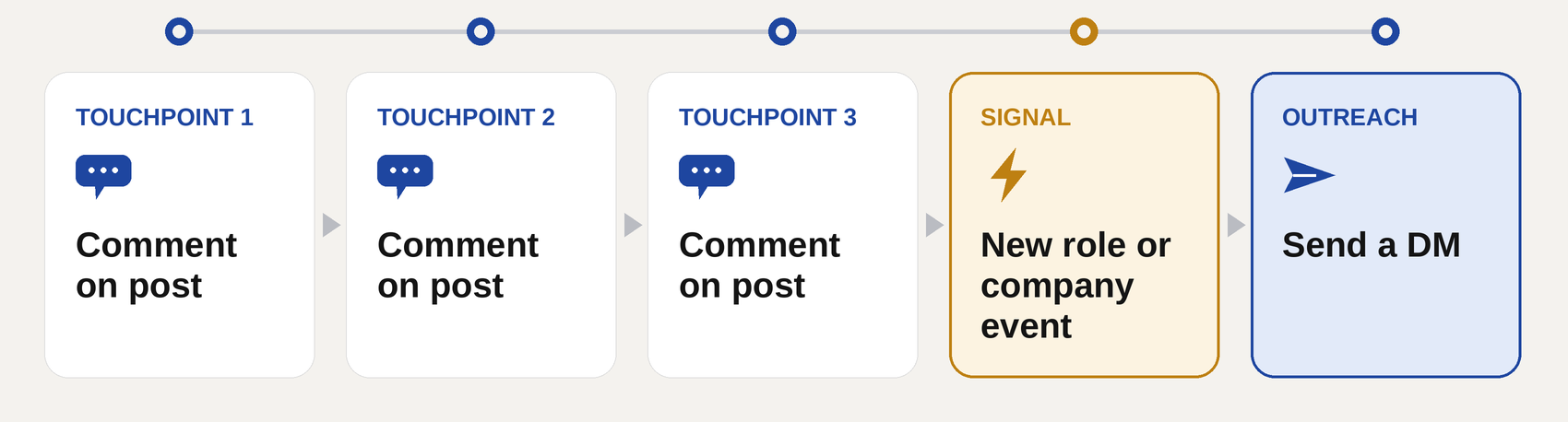
A lot of our pipeline at Sliq comes from people who already know us — prospects who weren't ready, customers who churned and came back, champions who moved companies and brought us with them. The thing that keeps those relationships alive isn't a quarterly "just checking in" DM. It's showing up in their comments, consistently, so that we're a familiar face when there's a real reason to talk.
Why commenting beats a check-in message
A "checking in" message asks for the other person's time and signals you want something. A good comment does the opposite: it gives them attention on something they chose to share publicly. You stay top of mind without pitching, and you do it right while they're active on the platform.
Over a few weeks, that adds up to a relationship that never went cold. When the timing is finally right (ie they post about a problem you solve, or they're back in market), you're no longer a stranger, making them more likely to take that first meeting. Keeping that cadence going automatically is a form of agentic outbound — nurture that happens without you remembering to.
Who to keep warm
Your whole feed is too much to keep up with, and most of it isn't worth a comment. Scope it to the relationships that actually matter:
- Open opportunities you want to keep warm: deals that are real but slow.
- Current customers: staying visible reduces churn and opens referrals.
- Champions: the people who'd recommend you, especially if they change jobs.
- High-fit prospects you're not ready to pitch: warm the relationship now so outreach later isn't cold.
You can point this at specific profiles, your entire first-degree network, or everyone posting about a particular topic. Narrower lists are easier to stay consistent with — better to make quality comments on 30 people's profiles than sporadically on 3,000.
What a good comment actually looks like
A good comment accomplishes one thing: add something of value to the recipient. The author can spot "Great post!" from a mile away and scrolls right past it — it's noise that, if anything, makes you look like you're farming visibility.
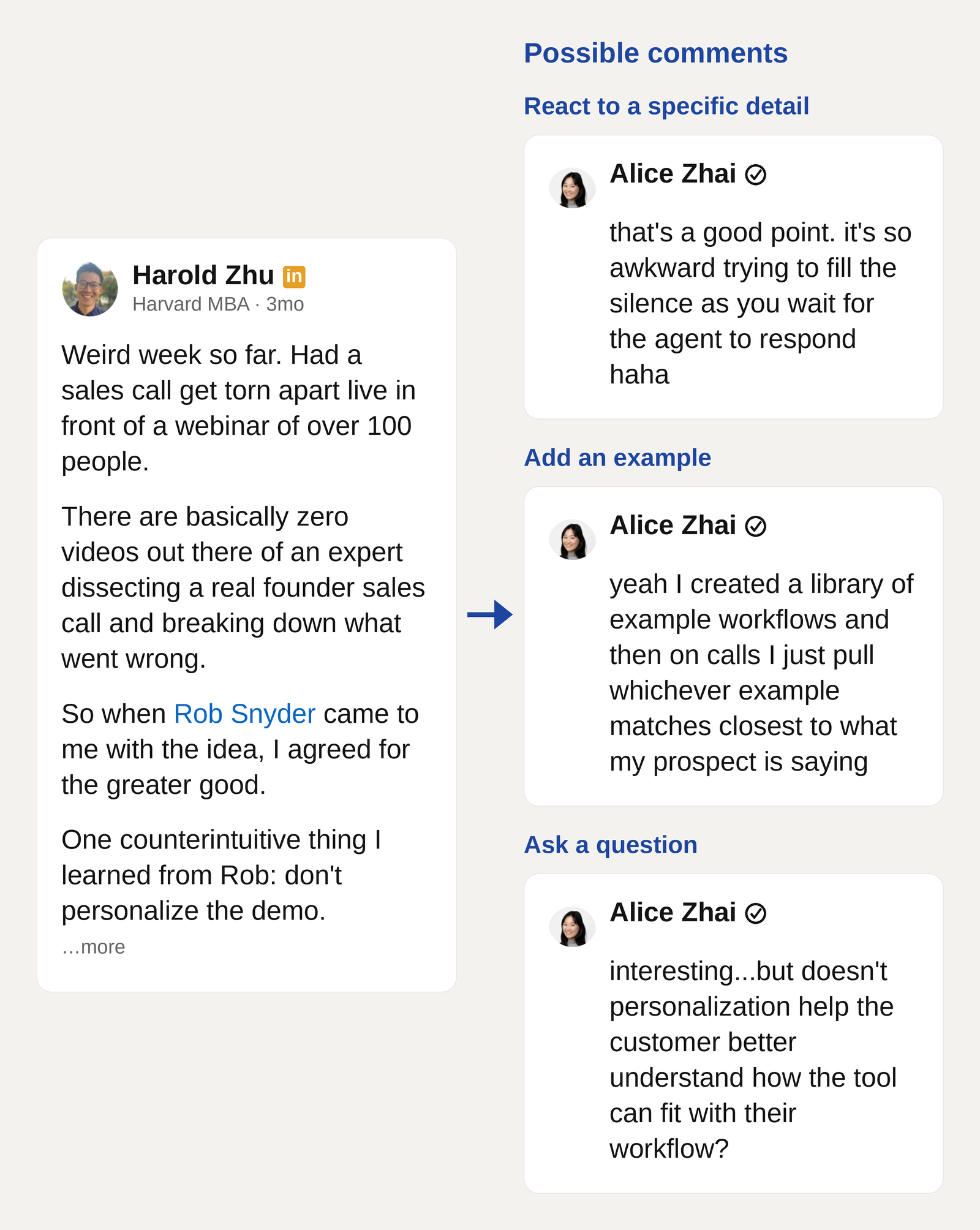
A comment that lands does one of a few things:
- Reacts to a specific detail — name the part of the post you're responding to, so it's clear you read it.
- Adds a relevant example — your own experience with the thing they're describing.
- Asks a question that moves the thread forward — one the author would actually want to answer.
Keep it short, keep it in your own voice, and leave the pitch out entirely. You're not selling in the comments; you're being a useful, familiar presence so that selling later is easy.
How to automate keeping your network warm with an AI agent
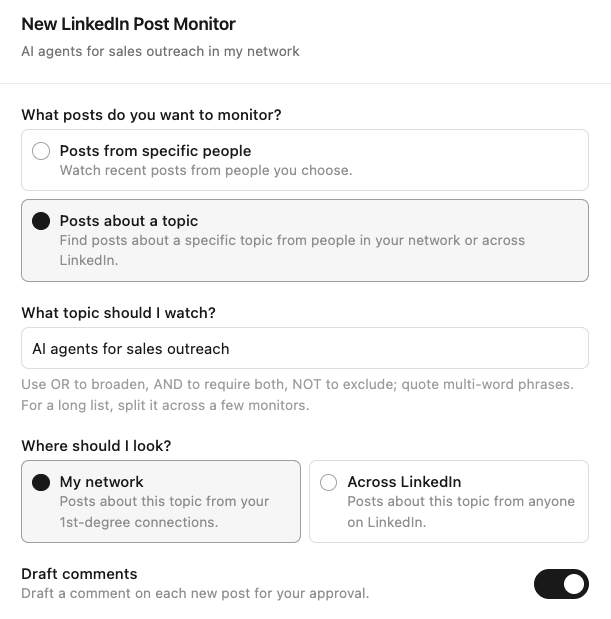
Monitoring the right people every day, catching their posts, and drafting a meaningful comment is tedious work to keep up with. A Sliq agent can help: you tell it who to watch and how you sound, and it surfaces their new posts and drafts a comment for each. The one thing it doesn't do is post on its own. Comments that are auto-generated and not reviewed by a human typically read generic at best and embarrassing at worst (a "great insight!" on a post announcing a layoff). Sliq is built so that a human reviews each comment before it gets published. You get the cadence of someone who's always around without compromising the authenticity of the comments.
Delegate this to a Sliq agent ->
Related workflows
- Find LinkedIn conversations about your product and comment to comment by topic, not just by person, and meet new buyers in the thread
- Turn engagement on your posts into outreach for the other side of the coin — capturing the people who comment on you
- Warm up prospects before outreach when the goal is to warm a specific prospect right before you message them
- Personalize your LinkedIn messages for when a warm relationship is ready to turn into a real conversation
- LinkedIn outreach best practices
- Browse all GTM plays
Frequently asked questions
How do you stay top of mind with your LinkedIn network?
Show up in their comments. Commenting thoughtfully on the posts of people you want to stay close to keeps you visible without a pitch and reminds them you exist right when they're active. The hard part is consistency, so the practical move is to watch a defined set of people and comment on their new posts at a steady cadence rather than relying on whatever the feed happens to show you.
Who should you comment on to keep your network warm?
Comment on the people whose relationship is worth maintaining: open opportunities you want to keep warm, current customers, champions who can refer you, and high-fit prospects you're not ready to pitch. You can scope it to specific profiles, your whole first-degree network, or people posting about a topic — narrow lists are easier to keep up with than your entire feed.
What makes a good comment on a LinkedIn post?
A comment that adds something — a specific reaction, a relevant example, a question that moves the thread forward. "Great post!" is noise the author scrolls past. Reference an actual detail from the post, keep it short and in your own voice, and skip anything that reads like a pitch. The goal is to be a familiar, useful presence, not to sell in the comments.
Should you automate LinkedIn comments?
Automate the watching and drafting, not the posting. Have something surface the new posts worth commenting on and draft a comment in your voice, then read every draft and approve, edit, or skip it before it goes live. Fully auto-posted comments read as generic and can embarrass you; a human-approved draft keeps the cadence without losing the judgment.
Last updated: September 2026